
.png)
.png)
In the digital age, the proliferation of cloud storage has transformed how data is stored, accessed, and analyzed. As organizations and individuals increasingly rely on cloud services for their data needs, law enforcement and prosecutors face new challenges in adapting their investigative techniques to these evolving environments.
This shift not only changes the landscape of data storage but also impacts the methods used to gather and analyze evidence. Understanding the best cloud storage for law enforcement and prosecutors is vital, as it lays the foundation for successful investigations and enhances the ability to respond to cybercrime and digital evidence-related cases. This article explores the specialized forensic tools that are essential for collecting evidence from cloud environments, highlighting the importance of cloud forensics in modern investigations.
What is cloud forensics?
Cloud forensics refers to the process of collecting, preserving, analyzing, and presenting digital evidence stored in cloud environments. This emerging field is critical in modern investigations due to the unique characteristics of cloud computing, such as:
The cloud forensics investigation process is vital in addressing these challenges, ensuring that evidence is collected in a manner that is both legally sound and technically robust.
What types of evidence can be collected during a cloud forensic investigation?
During a cloud forensic investigation, various types of digital evidence can be retrieved, including:
This evidence is essential in legal contexts, as it can substantiate claims, establish timelines, and provide insights into user behavior. Utilizing the right cloud forensic data collection tools ensures that this evidence is gathered efficiently.
What data sources are typically examined in a cloud forensic investigation?
Investigators often examine multiple data sources during a cloud forensic investigation, including:
- Cloud storage services: Platforms like Google Drive, Dropbox, and OneDrive.
- Databases: SQL and NoSQL databases that store structured and unstructured data.
- Application logs: Logs from applications that provide insights into user interactions and system performance.
Understanding which of the following tools are commonly used to obtain data in the cloud is essential for investigators to ensure comprehensive evidence collection. These tools help streamline the examination of data sources, enhancing the overall efficiency of the investigation.
How does cloud forensics differ from traditional digital forensics?
Cloud forensics differs meaningfully from traditional digital forensics in several ways:
| Aspect | Comparison Details |
|---|---|
| Methodology | Cloud forensics often requires remote access to evidence, whereas traditional forensics typically involves physical access to devices. |
| Tools | Specialized tools are needed for cloud environments, as traditional tools may not be compatible or efficient. |
These differences have implications for investigators, as they must adapt their techniques and strategies to accommodate the unique challenges posed by cloud environments. Utilizing appropriate cloud evidence acquisition techniques is essential for successful investigations.
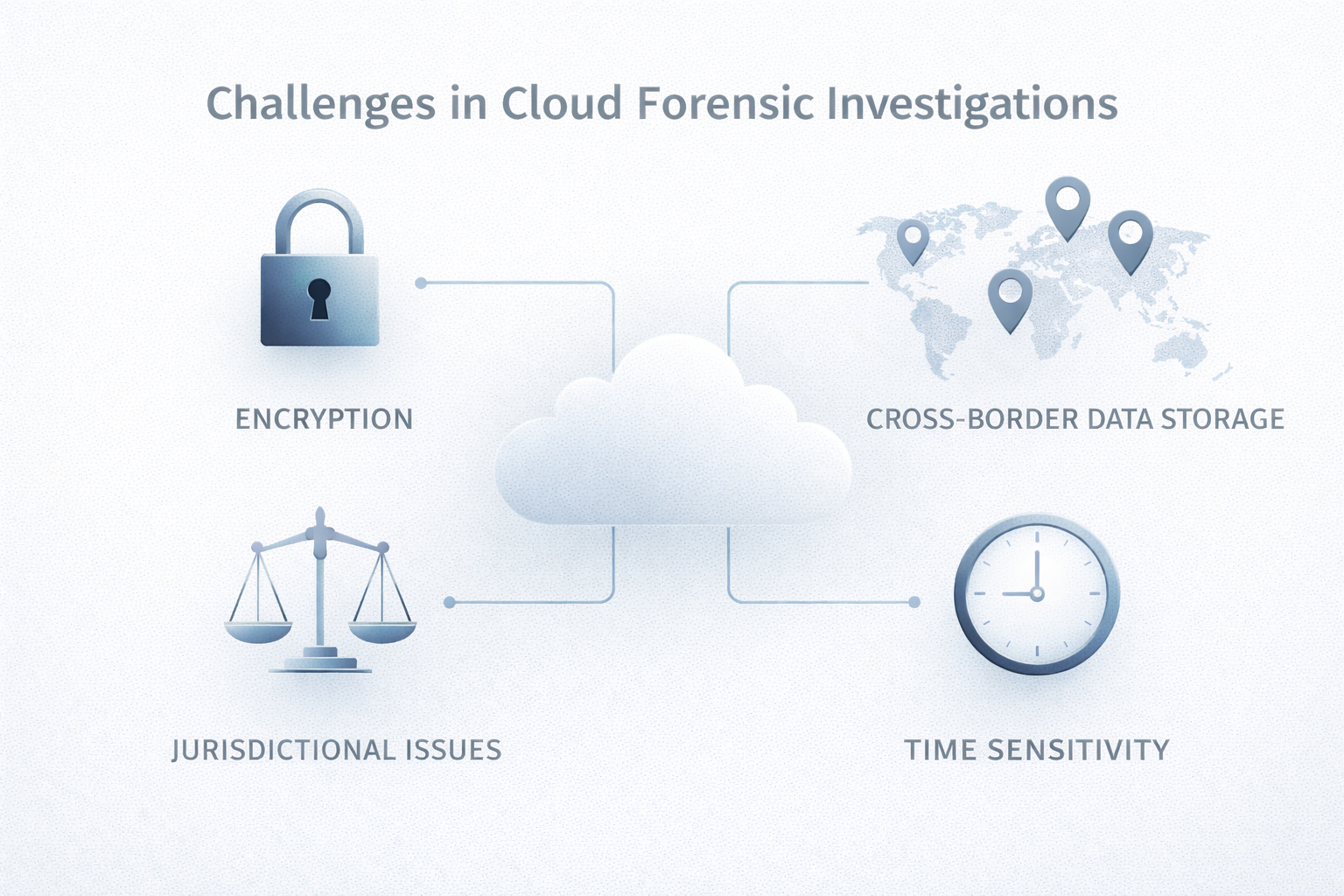
What challenges do investigators face when collecting evidence from cloud environments?
Investigators encounter several challenges unique to cloud forensics, including:
These challenges meaningfully impact the efficiency of investigations, making it imperative for law enforcement and prosecutors to stay informed about the latest tools and techniques in cloud forensics.
Specialized forensic tools for cloud environments
To address these challenges, specialized forensic tools designed specifically for cloud environments are invaluable. Notable tools include:
Belkasoft Evidence Center X
This digital forensics and cyber incident response software supports data extraction from various sources, including cloud services like iCloud, Google Cloud, WhatsApp, Instagram, Microsoft 365, and Google Workspace. It offers features such as mobile acquisition, cloud analysis, and encryption handling.
Cirrus
An open-source Python-based tool designed to streamline Google Cloud forensic evidence collection. Cirrus aggregates logs and configurations from different Google Cloud components, accesses user-specific data in Gmail, and automates access prerequisites for evidence collection. (helpnetsecurity.com)
Cellebrite's Inseyets
Part of Cellebrite's digital forensics software, Inseyets introduces advanced media analysis capabilities, leveraging AI-powered forensic insights and pattern recognition to accelerate evidence review and understanding. (enterprise.cellebrite.com)
Cloud Investigation Automation Framework (CIAF)
An AI-driven framework that automates cloud log analysis, enhancing efficiency and accuracy in forensic investigations. CIAF standardizes user inputs through semantic validation, improving data quality and providing reliable, standardized information for decision-making. (arxiv.org)
ForensiCross
A cross-chain solution designed for digital forensics and provenance, facilitating secure collaboration among different agencies by ensuring data integrity and traceability across interconnected blockchains.
These tools are essential for law enforcement and prosecutors, enabling them to effectively collect and analyze evidence from cloud environments while addressing the unique challenges posed by cloud computing.

.png)


